8 min read


A closer look at the craftsmanship, heritage, and enduring legacy of Brac stone
On the island of Brac, stone is not simply a material, it is a constant. It shapes the landscape, defines the architecture, and the people. Across the island, villages seem to emerge from the same surface they stand on. There is a quiet continuity to it all, as though the island has been carved out rather than built.
What gives Brac stone its particular character is not only its bright colour, but its density, its durability, and the way it responds to time. Known varieties such as Veselje, Sivac, and Dracevica reveal subtle differences in tone and structure, variations that are often unnoticeable at first glance, but deeply valued by those who work with them. And yet, the origin of this material remains largely unseen, as do the people responsible for shaping it into its final form.

The earliest uses of Brac stone date back to Illyrian and Roman times. Evidence of this presence can still be found across the island, in places where the landscape itself carries traces of extraction. Among them are the remains of Roman quarries, where carved figures of Heracles, which was considered the protector of people working in the quarries, still endure embedded in stone. Today, quarrying on Brac is not a static tradition preserved for the sake of nostalgia. It is something quieter, more continuous: an accumulation of knowledge passed down through generations and adapted over time.
There was a time when stone on Brac was not considered a luxury, but a given. It was readily available, used out of necessity rather than intention. Homes were built from what was closest, most practical, stone that was simply part of everyday life. Today, that same material carries a different meaning. Extracted with precision, selected with care, and placed within considered spaces, it has become something far more deliberate. Not just a building material, but a marker of permanence, of restraint, of quiet prestige.
Methods of extracting the stone have changed. Machines have replaced much of the manual labor that once defined the work. But the essential understanding remains the same: where to cut, how the stone will respond, when to stop.


In a recent conversation with Lino, a quarryman from Pucisca, home to some of the island’s most well-known quarries, he reflects on how dramatically the process has evolved: “Today, everything is more modern, it moves faster. Before, a single cut from the hillside, maybe fifteen, twenty, even thirty cubic meters of stone, would take a week to extract. It was all done by hand. It was drilled manually, and stone was being split piece by piece. Now, an electric wire saw can cut through the same block in a day and a half. Modernisation has changed everything. It has made the work easier.”
The workflow has changed, but the material has not. Even with the speed of modern tools, the stone continues to demand the same level of attention.
Lino has spent more than twenty-five years in the quarry. He speaks of stone with a certain attentiveness, less as a resource, more as something that requires interpretation. As he explains, understanding it comes not from instruction, but from immersion: “You simply live with the stone—you’re born into it, and you feel it for what it is.”
“There is nothing luxurious about the quarry,” he adds. The work is physical, repetitive, exposed to the elements. And yet, perhaps this is where luxury, in its truest form, begins – not in the finished object, but in the knowledge, patience, and precision required to bring it into being.
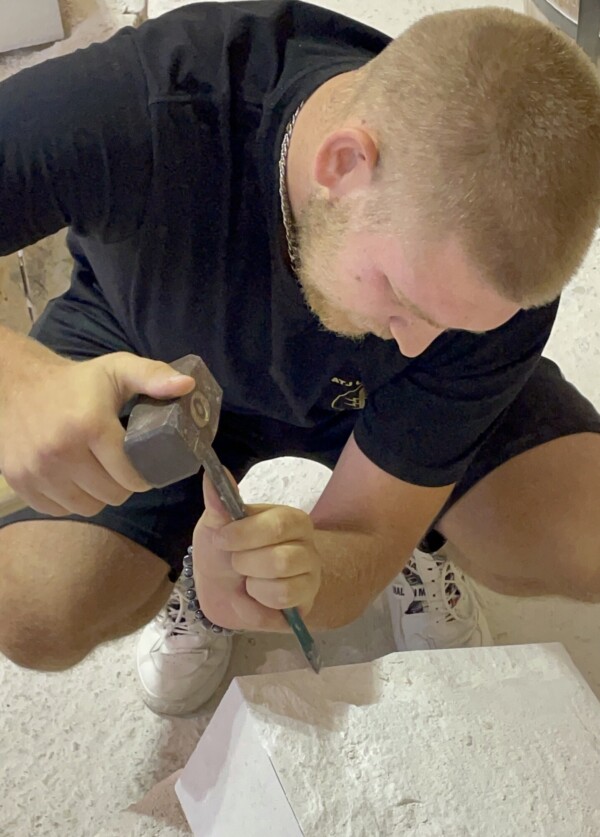

For centuries, this stone has traveled far beyond its point of origin. It forms the foundations of places like Diocletian’s Palace in Split, the Parliament buildings in Vienna and Budapest, and appears even in the lobby of the United Nations in New York. Elsewhere, it reveals itself more discreetly: within courtyards, facades, and interiors of homes along the Adriatic.
There is a quiet dissonance between origin and outcome. Here, the landscape is raw, exposed, defined by function. But once the stone leaves the quarry, it becomes something else entirely. It is refined, composed, placed within spaces that feel calm and intentional. It is easy to overlook this transition.
A hotel terrace overlooking the sea. A shaded courtyard. A staircase worn smooth over time. These are the places where Brac stone is most often encountered, rarely questioned, almost never traced back to its source. And yet, that connection exists. From the quarries to historic sites like Diocletian’s Palace, and far beyond the Adriatic, the material carries a continuity that is both physical and cultural.

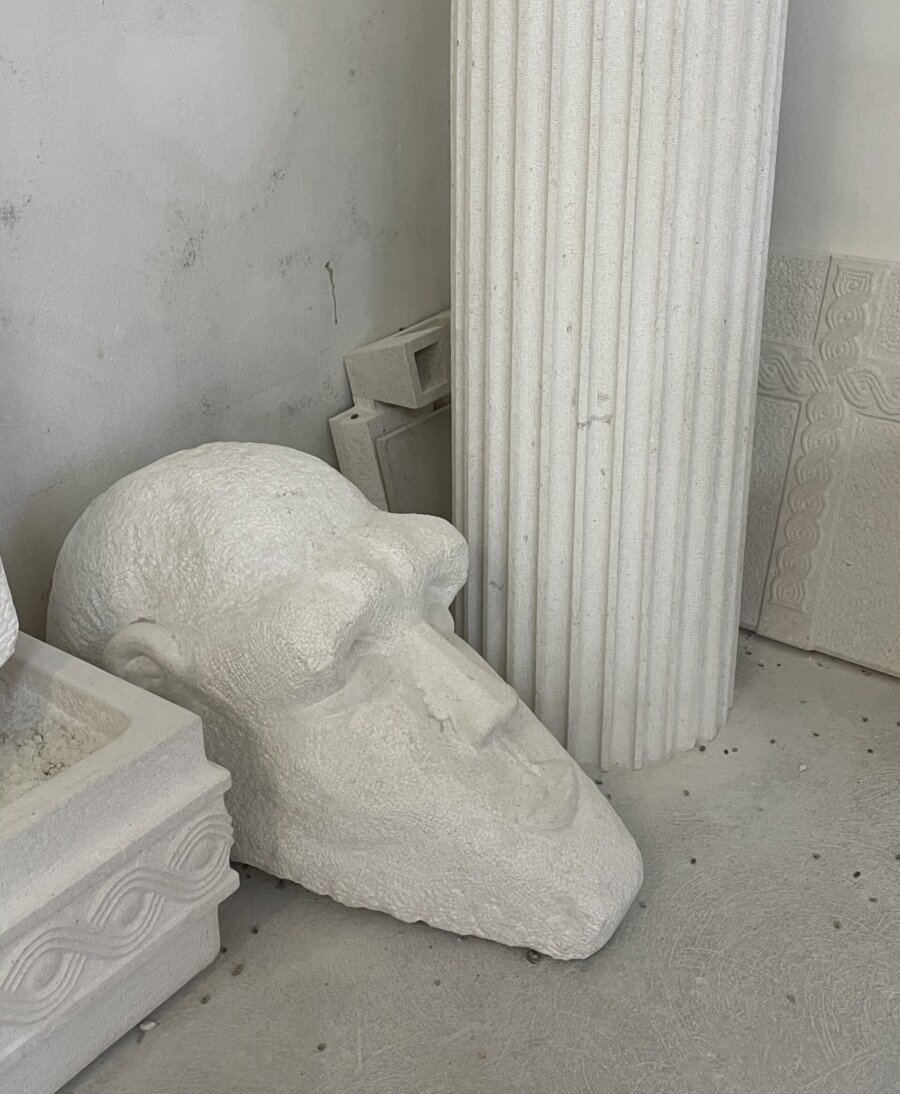
By the time Brac stone reaches its final form, much of its process has disappeared from view. What remains is surface: smooth, quiet, resolved. But somewhere beneath it, there is still the memory of the quarry.
Perhaps that is the enduring quality of Brac stone. Not only its ability to last, but its capacity to carry process within it, to hold traces of where it began, even when placed in entirely different contexts.
To understand Brac stone fully is to experience it on Brac itself, among its quarries, its artisans, and within the walls of its stonemasonry school; the team at Journey2Croatia can arrange a journey that brings you closer to its story.
Quarry photo credits: Hrvoje Gabric / Archive of the Pucisca Tourist Board, @visitpucisca


