Croatian sculptor Hrvoje Dumancic shares how horses, memory and emotion continue to shape both his life and his art…
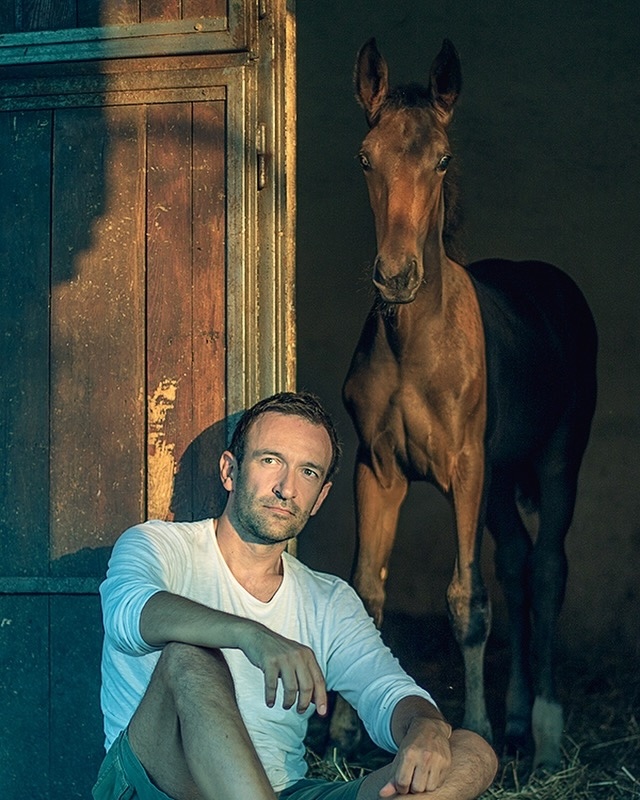
Long before international exhibitions, public sculptures and gallery openings, there was simply a boy who was fascinated by horses. That fascination never disappeared. Instead, it grew alongside him, becoming part of both his life and his art. Today, horses remain at the heart of Hrvoje Dumancic’s work, not only for their beauty and strength, but for what they reveal about memory, emotion, imagination and ourselves.
From childhood memories and years spent in the saddle to internationally exhibited sculptures, we spoke with Hrvoje about the journey that shaped him and the horses that continue to inspire his work.
Childhood, Memory & Horses
1. Were horses always at the centre of your world? When did you first begin creating, and did you know these passions would shape your future?
Horses came into my life very early. The first time I remember seeing them I was about five years old, at my parents’ weekend house in Zelina. Our neighbour was ploughing a field with horses and I was so fascinated by them that my father took me to see them in the stable the very same day. I think that was when the first seed of that love was planted.
A few years later, when I was around seven, I watched a television programme about the Zagreb Hippodrome and wanted to start riding. Before that, my mother had taken me to many different activities, but none of them lasted very long. Riding was different, and it has stayed with me ever since. I don’t actually remember the first sculpture I made, but my parents always told me that I made a horse in kindergarten.
When I was in seventh grade, I was supposed to enrol in a painting course, but by mistake my mother took me to the wrong floor, where a sculpture class was taking place. Once I got there, I decided I didn’t want painting anymore and stayed with sculpture. If I had to sum it up, my first drawing was a horse, my first sculpture was a horse, and horses seem to have been my path from the very beginning.
2. You have said that horses became your road signs and teachers. What is the most important thing they have taught you?
They were definitely my greatest companions in life. Looking back, I can recognise that I was probably quite an introverted child, and around horses I found a safe place where I felt comfortable. That feeling has stayed with me ever since.
Over the years, I started comparing horses and people. What fascinates me is how clear horses are. There is hierarchy, order and honesty in the way they communicate. With people, you can look someone in the eyes and still not know if you are getting the real answer.
Horses also reveal a lot about us. If you are insecure, fearful or manipulative, they will show it very quickly. They have an incredible sense for people, and that honesty is something I have always admired.
3. What do you wish people understood more deeply about horses, and what can they teach us about ourselves?
People usually associate horses with strength, and I absolutely agree with that. But for me, the beauty of a horse lies in the combination of strength and sensitivity. A horse is physically much stronger than a human being, yet at the same time incredibly sensitive.
That contrast has always fascinated me. In a way, I would say they are a hundred times stronger, but also a hundred times more sensitive. I think the same lesson applies to people. We often see strength and sensitivity as opposites, but I believe the real value is in the balance between the two.
Riding & Connection
4. How has being a rider shaped the way you observe and sculpt horses?
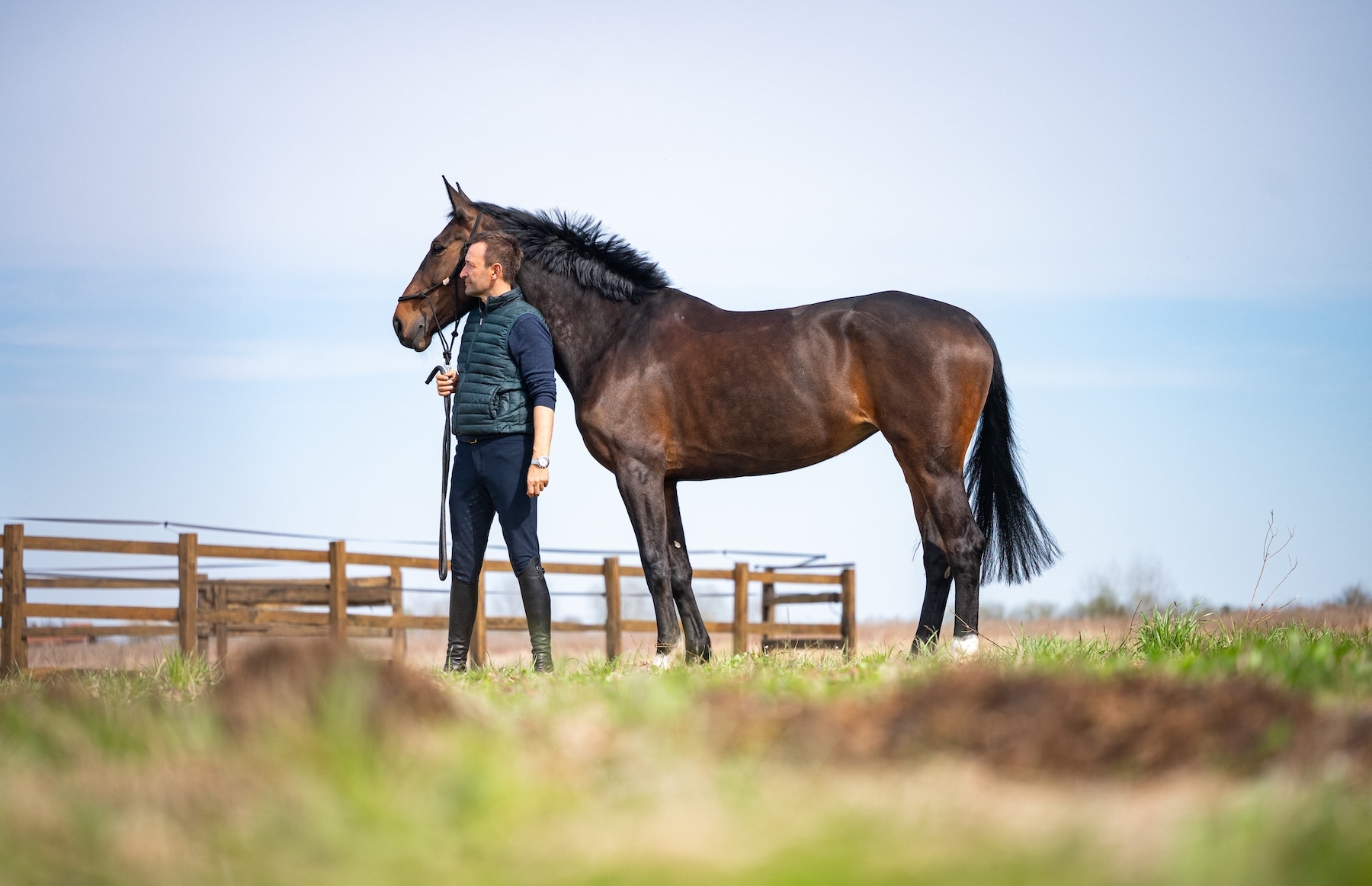
I think it helps me a lot, not simply because I’m a rider, but because I’ve been connected to horses since childhood. Even when I simplify or stylise a form, I still carry a very deep understanding of the horse’s body. I don’t need photographs in front of me, I can often work from memory alone.
The same applies when I am creating a horse’s character. A good example was the Museum of the Sinjska Alka, where I created ten life-sized horses for the procession. Each horse has its own character, its own movement and its own story. I tried to imagine how each horse felt in that particular moment, how it carried itself, how it reacted to the rider, what happened to the tail, the ears and the posture. Every sculpture in the museum represents a different horse.
There are many hidden details and symbols within those sculptures because I experience horses very deeply. All those years around them inevitably become part of the work.
5. Is there a particular horse from your life that has found its way into your work, consciously or unconsciously?
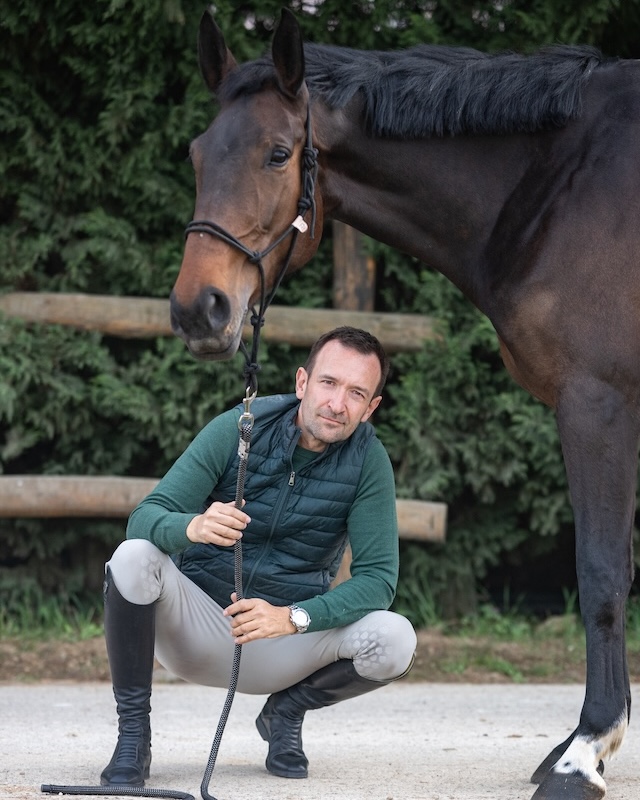
Perhaps the strongest example is Aramis, the horse I had during my teenage years. It was a time when I was growing up and going through a lot of changes, and he became a great support in my life. People often told me I should sell him and buy a better horse, but for me he was the best horse simply because he was my horse.
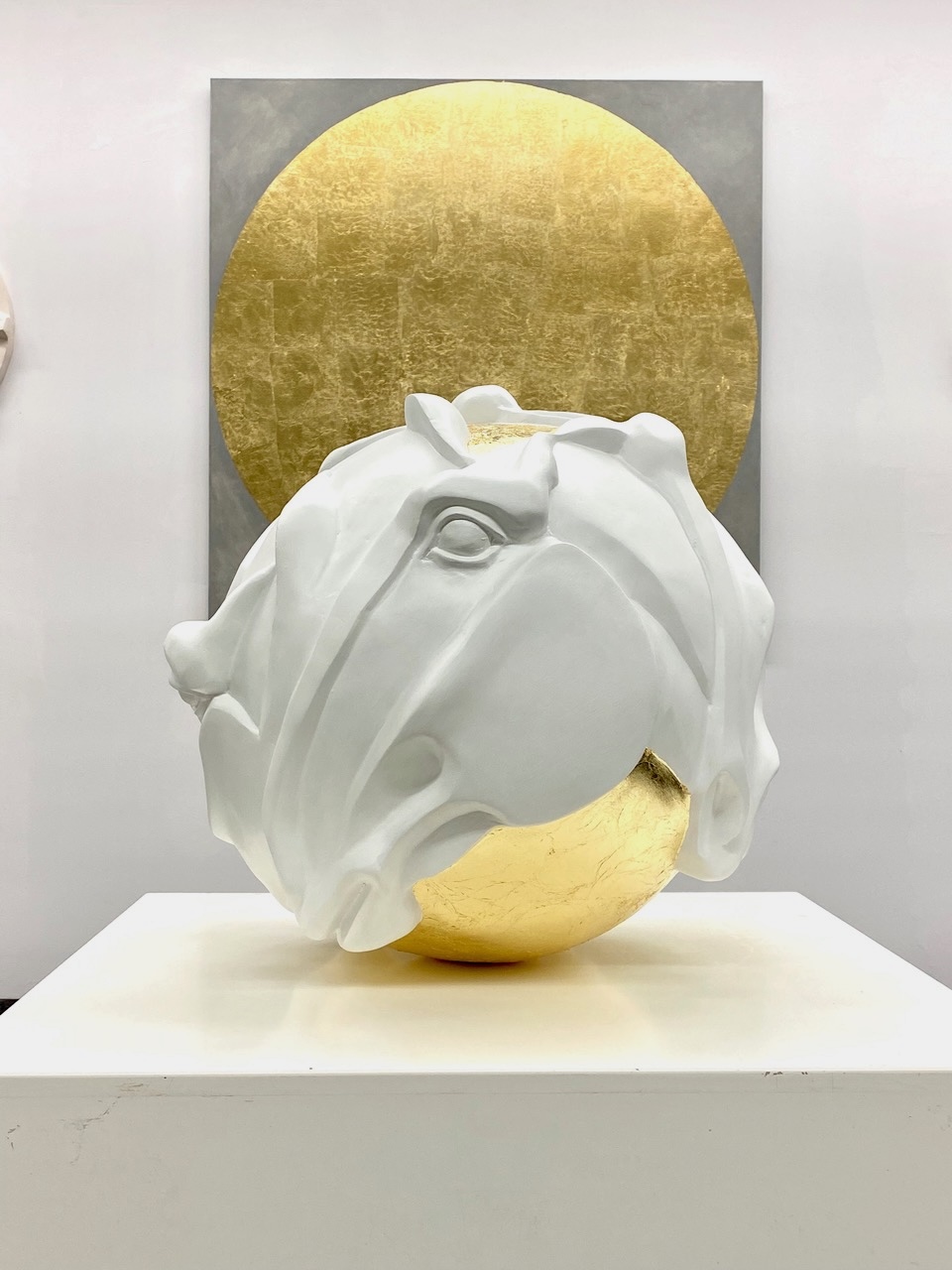
That is why I decided to immortalise him in a sculpture. The result was Aramis, which also became my graduation piece. Two years later, Aramis was accepted to an international art salon in France, where it received the Grand Prix for Sculpture.
As a rider, that was probably one of the greatest satisfactions of my life. The real Aramis and the sculpture Aramis reached a kind of peak together. At that moment, I felt that both of us had received the recognition we deserved.
Art & Emotions
6. Your doctoral thesis explored childhood memory. Why does it continue to inspire your work?
My doctoral research focused on the rocking horse as a symbol of childhood. I wanted to explore whether sculpture could awaken childhood memories and emotions in the viewer. I think childhood is the period when most of us were the most honest with ourselves. As we grow up, we are shaped by family, school, society and expectations.
Returning to childhood memories often means returning to the version of ourselves that was closest to who we really are. What interests me is not only the horse itself, but also the way we perceive forms. There is a theory by Gombrich: if a broom is standing in the corner, it is just a broom. But if a child places it between their legs and starts running, nobody says the child is riding a broom.
They say the child is riding a horse. That simple idea says a lot about how imagination and perception work. I approach sculpture in a similar way. I am not interested only in anatomical accuracy. I often think about sculpture almost like music, looking for rhythm, harmony and balance between shapes and lines.
7. Do you find it easier to express yourself through sculpture than through words?
Personally, I find it much easier to express myself through sculpture than through words. Sometimes a sculpture gives answers that I didn’t even know I carried within myself, while with words I often wonder whether I have said too much or too little.
Art has always felt more natural to me. I can easily share an image, but writing about it is often much harder. Some people create through words. I create through sculpture.
8. What do you hope people feel when they stand in front of your sculptures?
I would like a sculpture to touch people, but I never expect them to understand it in the same way that I do. A good example was Forgotten Emotions at Gallery Bacva, where visitors had to take off their shoes and walk barefoot across real grass to reach a single sculpture. At the time, I worried that people would not understand the idea.
Over time, I realised that everyone brings their own experiences and emotions into an encounter with art. What matters most to me is that some kind of connection happens between the work and the viewer.
Artistic Journey & Career
9. What would surprise the young artist who had just graduated from the Academy most about your journey?
When I graduated from the Academy, I was convinced it would be very difficult to build a career as an artist who sculpted horses. Many people didn’t understand that choice, and I often felt there was a prejudice against someone who wanted to focus on horses as a subject.
Everything changed after winning the Grand Prix for Sculpture at an exhibition in France. That opened many doors and led to scholarships, exhibitions and new opportunities.
10. Many artists spend years searching for their place and audience. Did you ever question your path or consider taking a different direction?
Although many people advised me to follow trends or choose a safer direction, I never seriously considered abandoning my path. Sometimes I was even embarrassed to admit how much I loved sculpting horses, but I always came back to the same conclusion, it was simply what I loved doing.
Looking back, I am glad I stayed true to that. What matters most to me today is not how others define me, but the fact that I still get to do what I love and remain true to myself.
11. If you had to tell the story of your artistic journey through three places, which places would they be and why?
The first would certainly be Zagreb. It is the city of my birth, my identity and my upbringing. It is where everything began, both personally and artistically.
The second would be Saumur. I often say that I was born in Zagreb, but my artistic birth happened in Saumur. It was there that I first felt my work had found its audience and where I received the confidence to continue being exactly what I wanted to be, a sculptor of horses.
The third would be Paris. For me, it has always been a city of freedom, creativity and inspiration. It taught me that inspiration can be found anywhere, if you are open enough to notice it.
Projects & Achievements
12. Are there any projects or sculptures that stand out as particularly important in your career, and why?
The Museum of the Sinjska Alka would probably be at the top of the list. It was a project I wanted with all my heart and one I gave everything to. By the time it was finished, I was completely exhausted, but I never regretted a moment of it.
Another project would be my doctoral research and the sculptures Forgotten Emotions and Memory. They became much more than an academic project and allowed me to explore my own experiences, emotions and memories through art.
I would also mention a commission from a client in Morocco, where eighteen of my horse sculptures were installed in the main lobby of a luxury hotel. Interestingly, the project came through Instagram after the investors discovered my work online.
Outside the world of horses, one project that remains especially meaningful to me is the design of the church doors for the Church of Our Lady of the Rosary in Drnis. It challenged me in a completely different way and became a very personal piece of work.
13. How did the story of Memory begin, and what does it represent to you?
Memory was never planned. It emerged naturally from my doctoral research and, in a way, developed a life of its own. What fascinated me was the transformation itself. The original sculpture began to crack and collapse, almost as if it was disappearing, before eventually being reborn in bronze. That process became an important part of the work and its meaning. At first, I intended to sell it after completing my doctorate, but I realised it carried too much of my own journey.
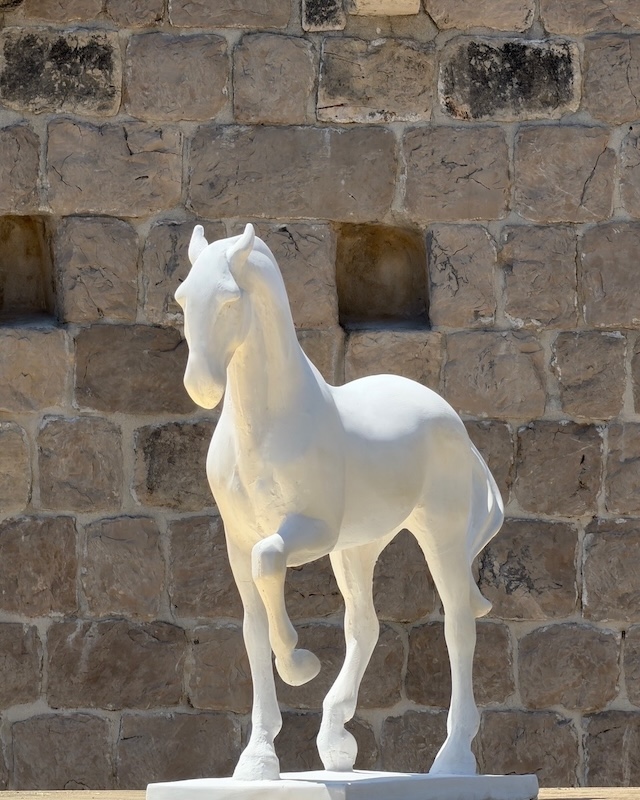
Instead, I decided it should travel. Since then, Memory has travelled from Verona and Saumur to Split and Switzerland, with Dubrovnik soon becoming the next chapter in its journey. What matters most to me is the idea behind it. Throughout history, equestrian monuments have often celebrated kings, emperors, rulers and military victories. They stand high on pedestals, symbolising power and authority. Memory is the opposite. It is riderless. It celebrates imagination rather than power, play rather than conquest.
It is placed among people rather than above them, and visitors are encouraged to interact with it, climb onto it and become part of the work themselves. In that way, the sculpture only becomes complete through the experience of those who encounter it. For me, it is a reminder that some of the most valuable things we carry through life are not possessions, but memories, emotions and experiences.
14. Your sculptures can now be found in collections and galleries around the world. Did you ever imagine your work would reach such an international audience?
Not at all. When I graduated from the Academy, I was convinced it would be difficult to build a career as an artist who sculpted horses. Everything changed after exhibiting at Salon Art Cheval in Saumur, one of the most important events dedicated to equestrian art.
That experience opened many doors. It led to exhibitions, scholarships and collaborations with galleries in France, London and the United States. One particularly memorable moment was meeting Jean-Paul Guerlain, who visited my exhibition and later purchased one of my sculptures for his private collection.
Today, my work is represented internationally, including through galleries in Wellington, Florida, one of the world’s leading equestrian centres. Even now, I sometimes find it difficult to believe that sculptures which began in my atelier in Zagreb have travelled so far.
15. At this stage of your life and career, what excites you most about the future? And how would you like your work to be remembered?
What excites me most is that I no longer feel the need to prove anything. As I get older, I see creativity more as a form of play and exploration than as a series of goals or deadlines. I still have more ideas than I could realise in a lifetime. People often ask whether I will ever run out of inspiration for horses, but I honestly feel I would need another life to make everything I would like to create.
As for how I would like my work to be remembered, I think less about that than I used to. What matters most to me is remaining authentic. If my work stays with people and means something to them after I am gone, then that is already more than enough.
A Lasting Connection
Today, Hrvoje Dumancic’s sculptures can be found in galleries, private collections, hotels and carefully chosen spaces where art, craftsmanship and storytelling come together. From intimate works inspired by memory and imagination to larger-scale projects shaped by his lifelong connection with horses, his work continues to reach new audiences both in Croatia and abroad.
At J2Collection, we have always believed that the most memorable experiences begin with stories and the people behind them. Through collaborations with Journey2Croatia, visitors have the opportunity to step into Hrvoje’s world and experience first-hand the passion, creativity and lifelong connection with horses that lie at the heart of his work, discovering the power of expression through art itself.
For Hrvoje, horses have never been just a subject. They have been companions, teachers and a source of inspiration throughout his life. And while his work continues to evolve, that connection remains as strong today as it was when he first discovered horses as a child.
A few final notes…
- Stable or atelier?
Stable - Clay or bronze?
Clay - Show jumping or trail riding?
Show jumping - Childhood memory or future dream?
Both - Intuition or discipline?
Intuition - Nature or city?
Nature - One horse that left the biggest mark on your life?
Aramis - The most important lesson horses have taught you?
Trust