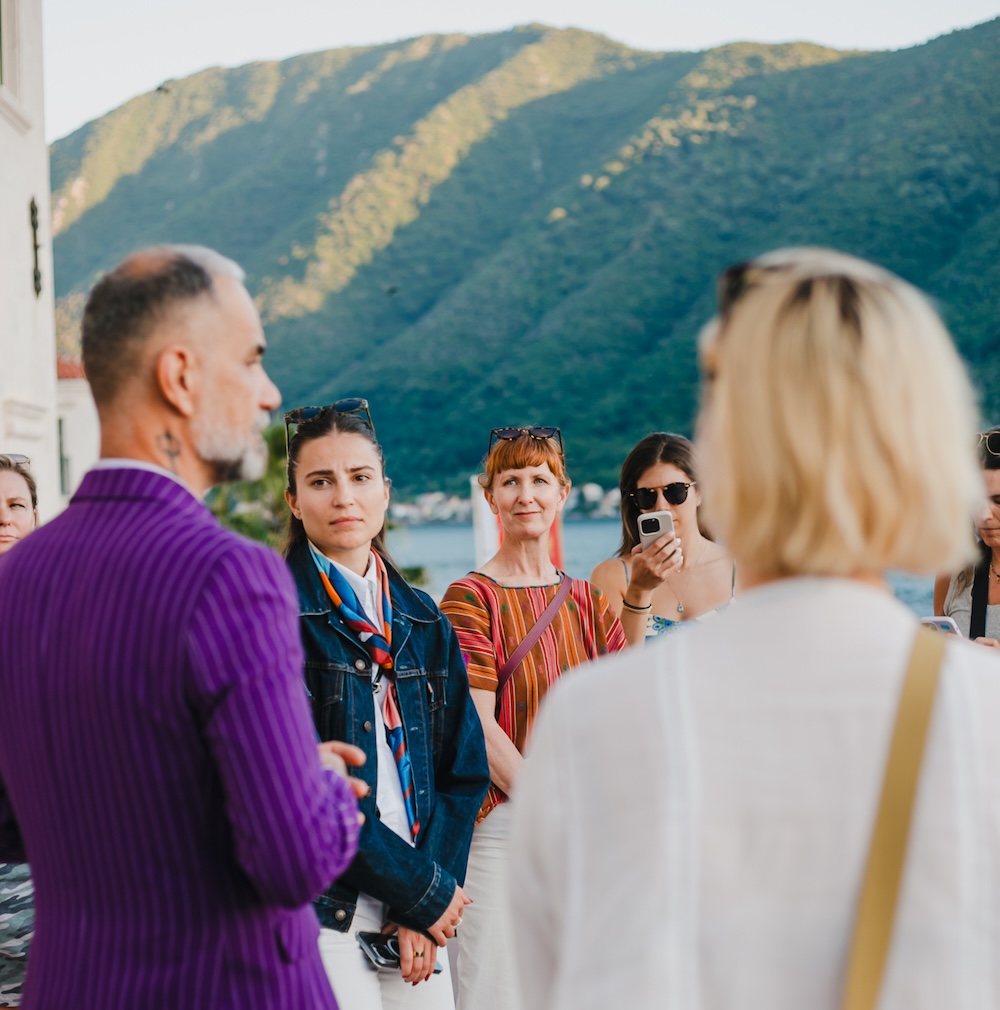
Our visit to Villa Argentina…
We came to discover the newly renovated Villa Argentina in Dubrovnik, but it was something created almost sixty years earlier that caught our attention.
A mosaic by Croatian artist Ivo Dulčić, a conversation with the hotel team and a story of preservation that made us look at the hotel a little differently.
Something we hadn’t expected to discover
There was much we were looking forward to seeing during our visit to Villa Argentina. The renewed interiors, the Mediterranean gardens and those familiar sea views across towards Dubrovnik’s Old Town and the island of Lokrum. Yet it was in the hotel’s spa that we found ourselves particularly curious.
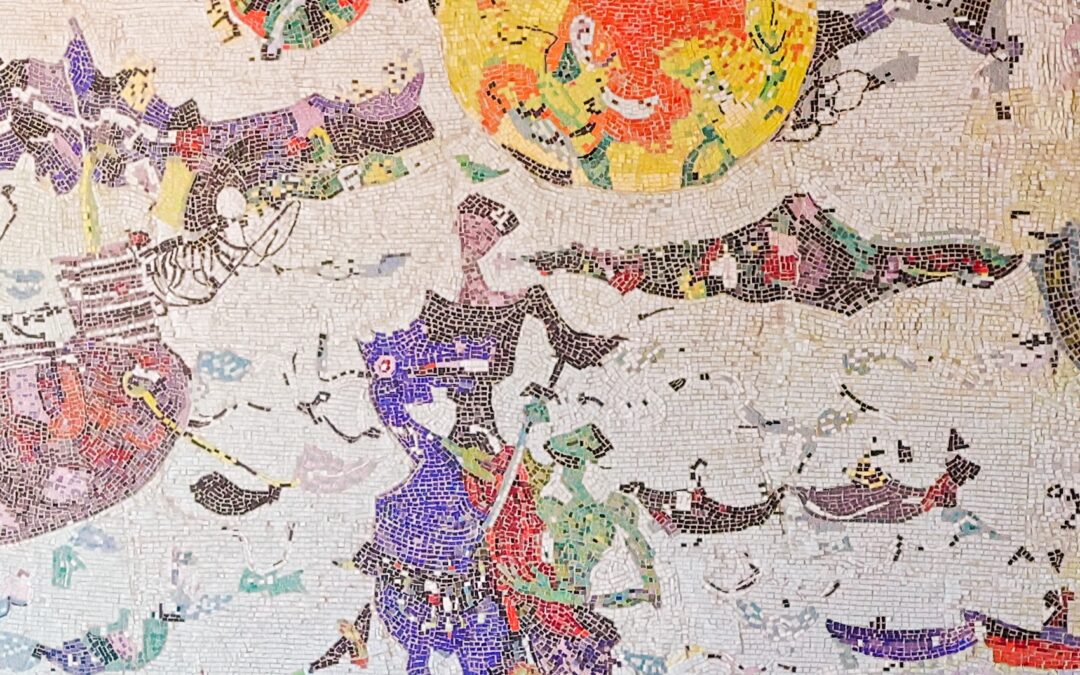
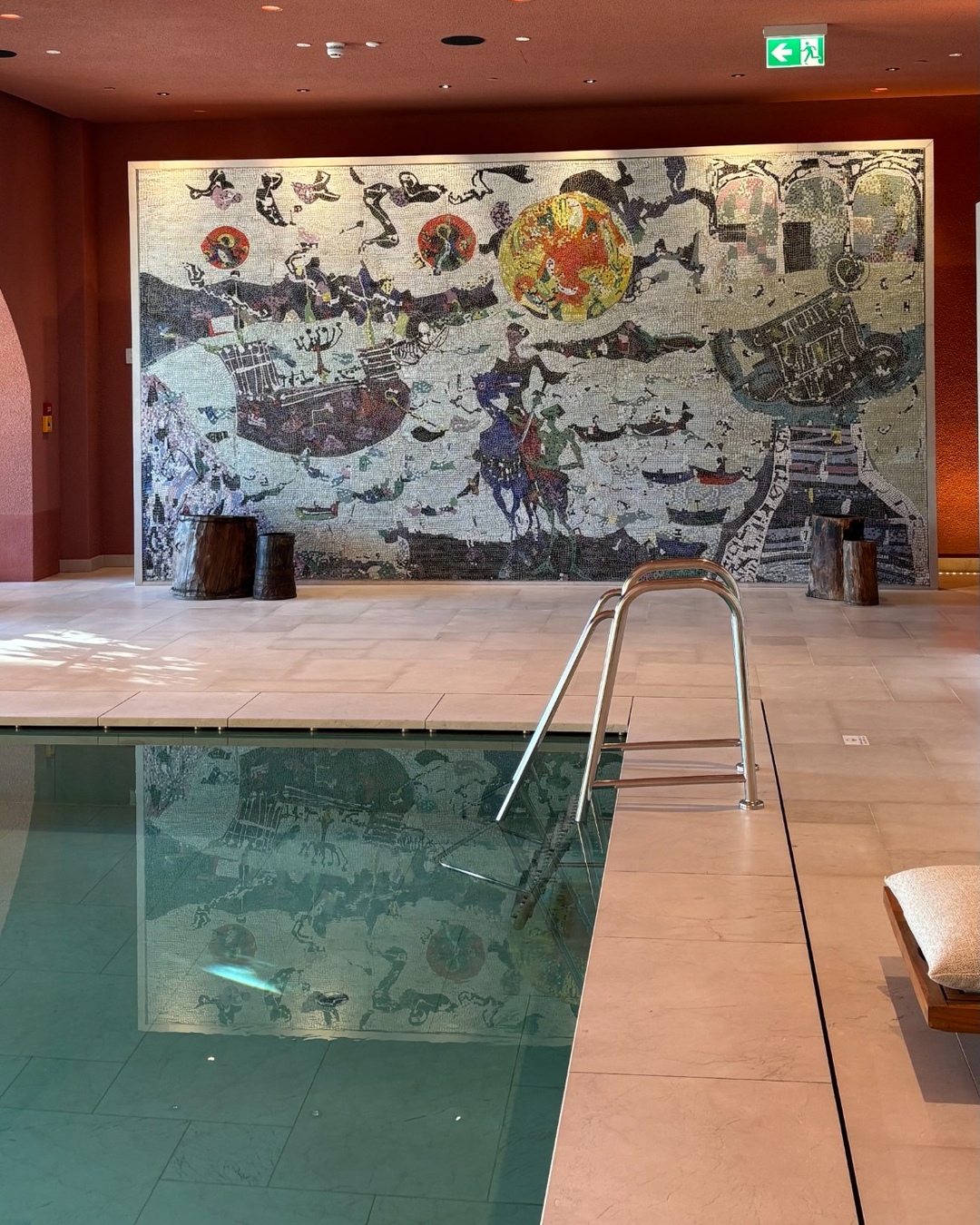
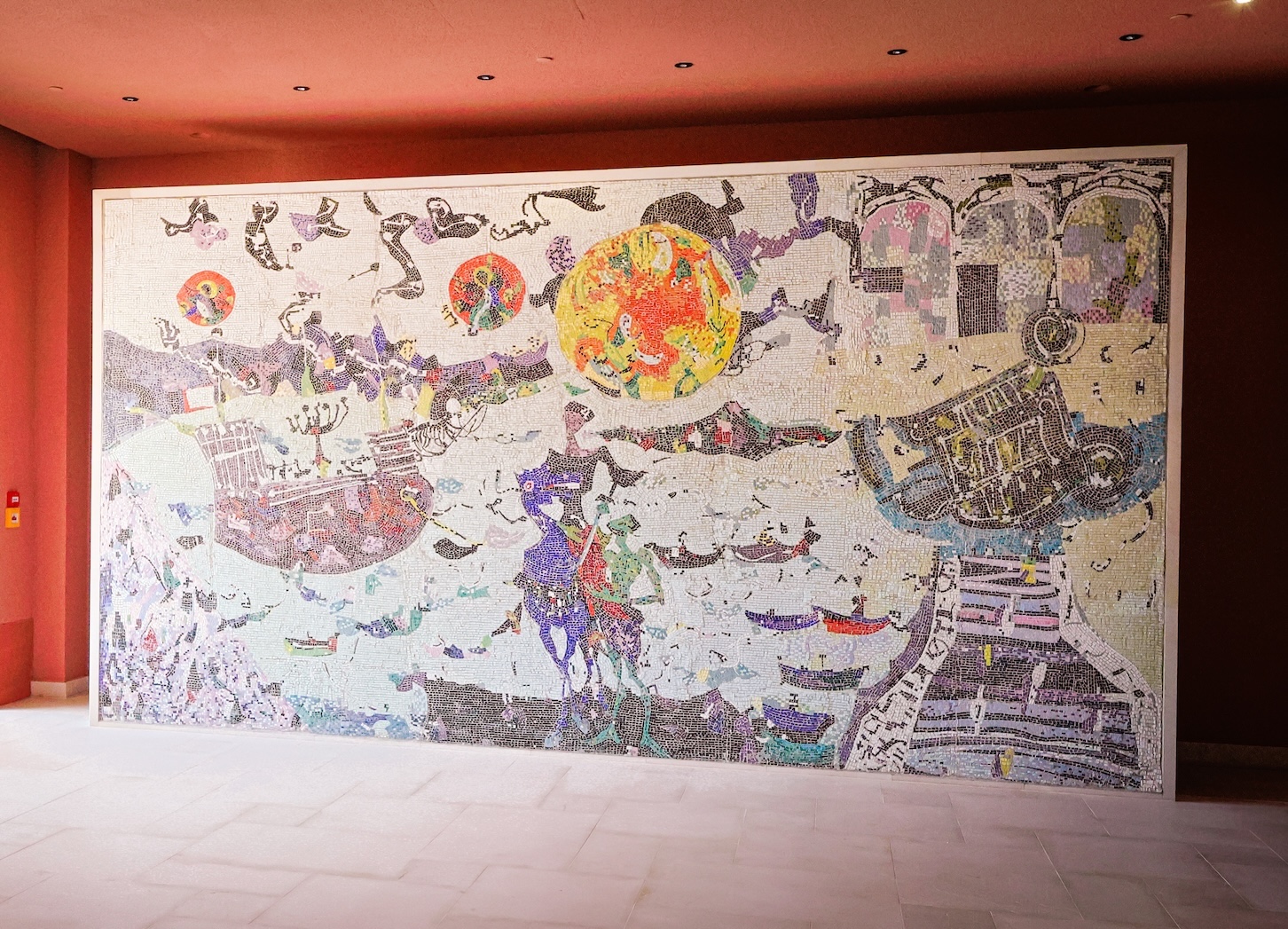
Beside the indoor swimming pool, a large mosaic stretches across the wall. Small pieces of coloured glass come together in a composition of abstract forms, architectural references, ships and a striking golden circle. We wanted to know more.
As we began asking questions, Katija from the hotel team shared the story behind the artwork, telling us about the artist who created it, its place in the hotel’s history and the care that had gone into bringing it back during the recent renovation.
What we had initially admired for its colours and composition turned out to be a piece of Dubrovnik’s artistic history. Created in 1967 by Dubrovnik-born artist Ivo Dulčić, the mosaic is called Dubrovnik Variations (Dubrovačke varijacije). And it was created specifically for this hotel.
Dubrovnik through the eyes of Ivo Dulčić
Born in Dubrovnik in 1916, Ivo Dulčić became one of Croatia’s important twentieth-century artists, known for his expressive use of colour and his work across painting, mosaics and stained glass. His hometown remained an important part of his artistic life, and looking more closely at Dubrovnik Variations, we begin to recognise something of the city within it.
According to the restoration report, the composition brings together references to Dubrovnik’s architecture, ships and the island of Lokrum, alongside a prominent golden circular form associated with the sun. Some elements are recognisable, while others are expressed through colour and abstract forms.
Measuring 5.40 metres wide and 2.90 metres high, the mosaic was created using small pieces of coloured glass, individually inserted into cement mortar following a prepared drawing. Imagine the time and attention involved in placing each of those little pieces of glass, gradually building a composition that would become part of the hotel for generations.
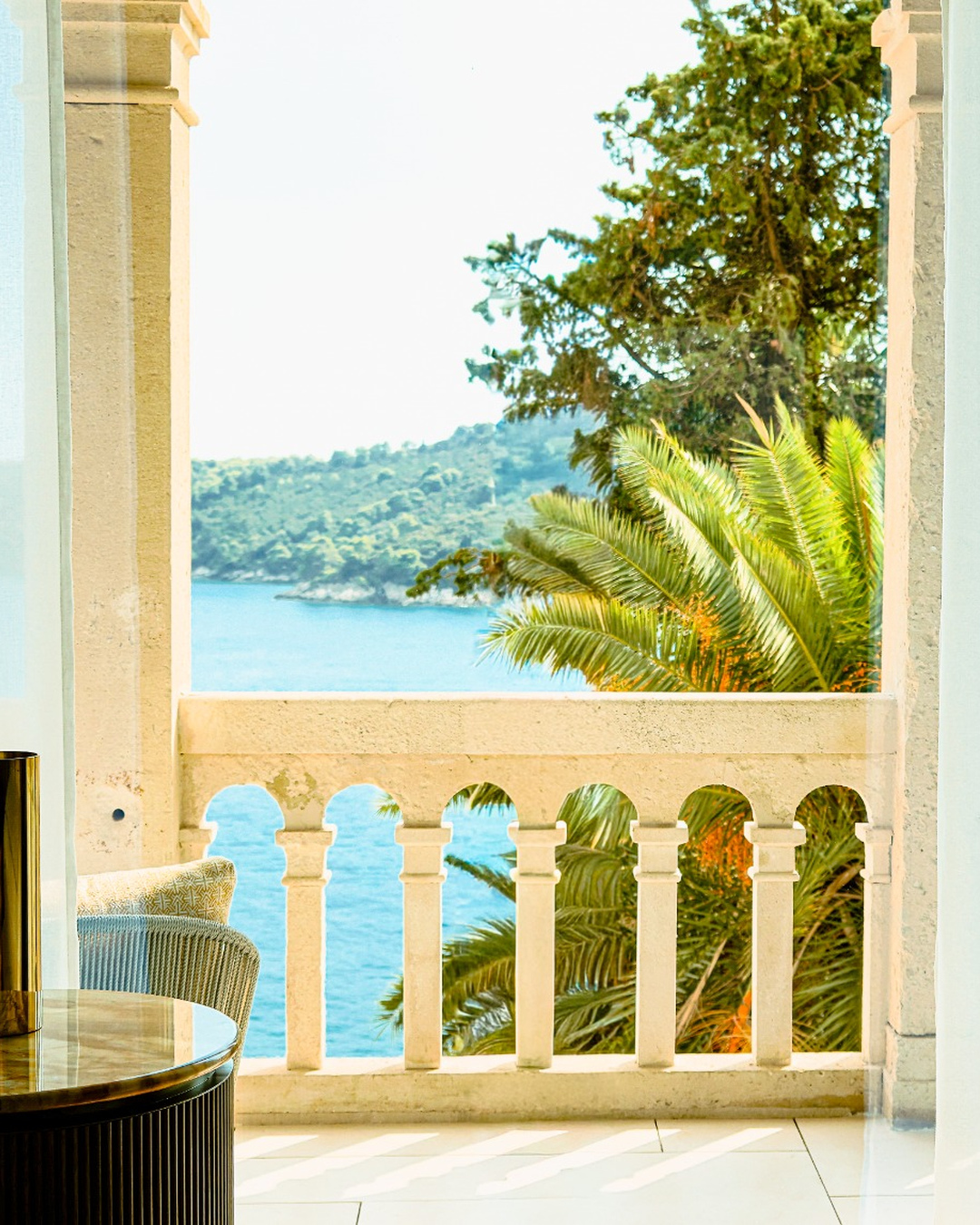
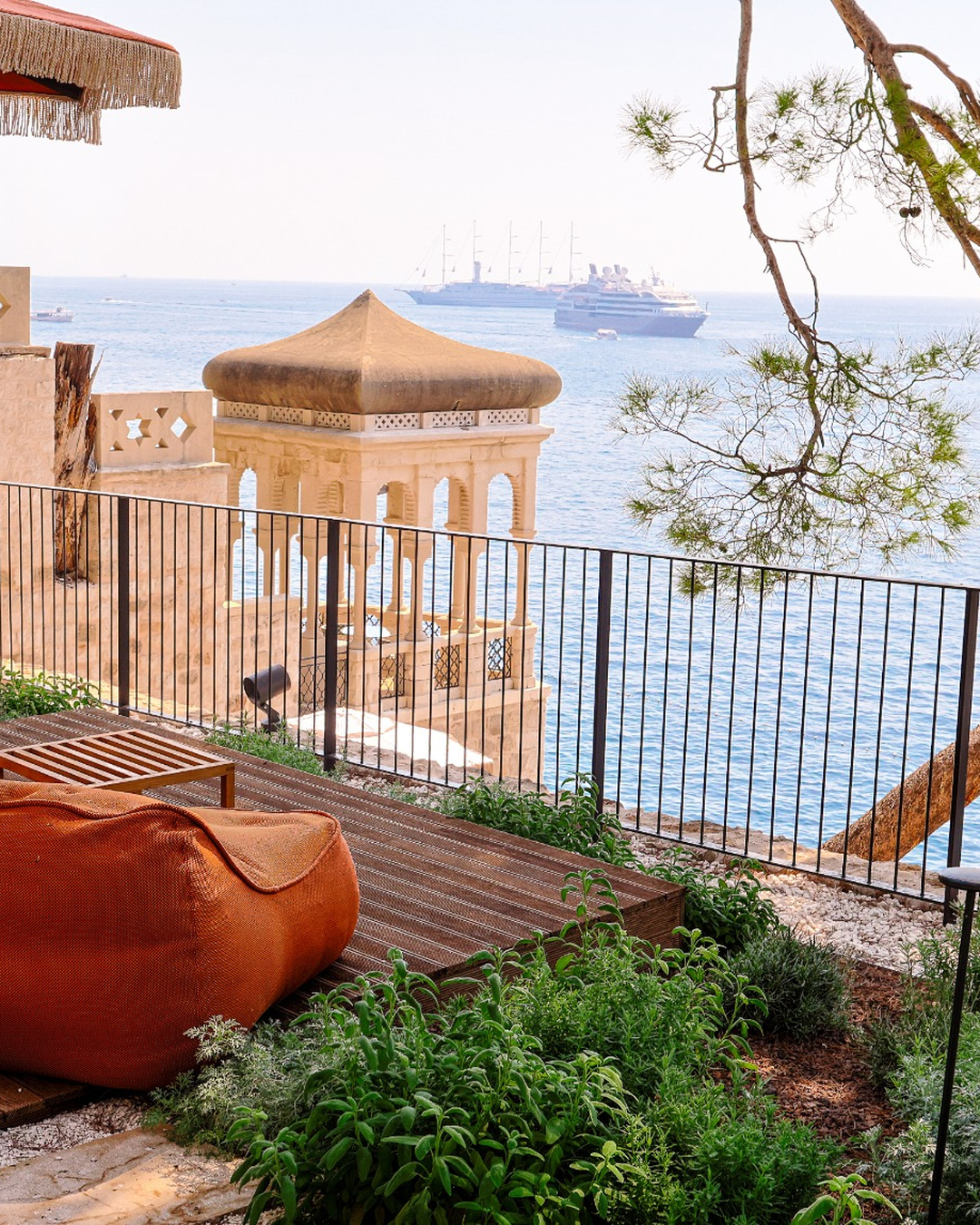
What we particularly like about the artwork is its relationship with the place for which it was created. The ships, the island, the architecture and the sun are not distant subjects. They are part of the landscape just beyond Villa Argentina’s walls. Step outside onto one of its terraces and there is Lokrum, the Adriatic and the familiar outline of Dubrovnik. Inside, Dulčić offers another way of looking at them.
An artwork that was part of the building
For almost sixty years, the mosaic formed part of Villa Argentina’s interiors. But when the hotel underwent its extensive renovation, preserving it presented a rather unusual challenge. This was not a painting that could simply be taken down from a wall and stored until the work was complete. The mosaic was part of the wall itself. Its individual pieces of glass were embedded in layers of cement, supported by iron reinforcement that had corroded over the decades.
Removing an artwork of this size without compromising its original composition required considerable care and specialist knowledge. The conservation and restoration were entrusted to Kvinar, a specialist company from Split, under the direction of Dr Tonći Borovac. After carefully documenting the condition of the mosaic, the team protected its surface and separated it into sections, following the original divisions within Dulčić’s composition.
Each section was then treated, cleaned and secured to a new support, allowing the artwork to be reassembled while retaining its original dimensions and composition. The work involved several stages during 2026. As the redevelopment of the original space required the mosaic to be relocated, a new position was chosen beside the indoor swimming pool, allowing it to remain part of the hotel’s interiors and accessible to its guests.
Today, looking at the complete artwork, it is difficult to imagine the complexity of what took place behind it. And perhaps that is one of the achievements of a good restoration: the work of those who preserved it does not distract from the work of the artist.
The mosaic was the principal original artwork preserved during Villa Argentina’s renovation. Nearly six decades after Dulčić created it, it remains part of the hotel for which it was intended.
Villa Argentina: A familiar address, a new chapter
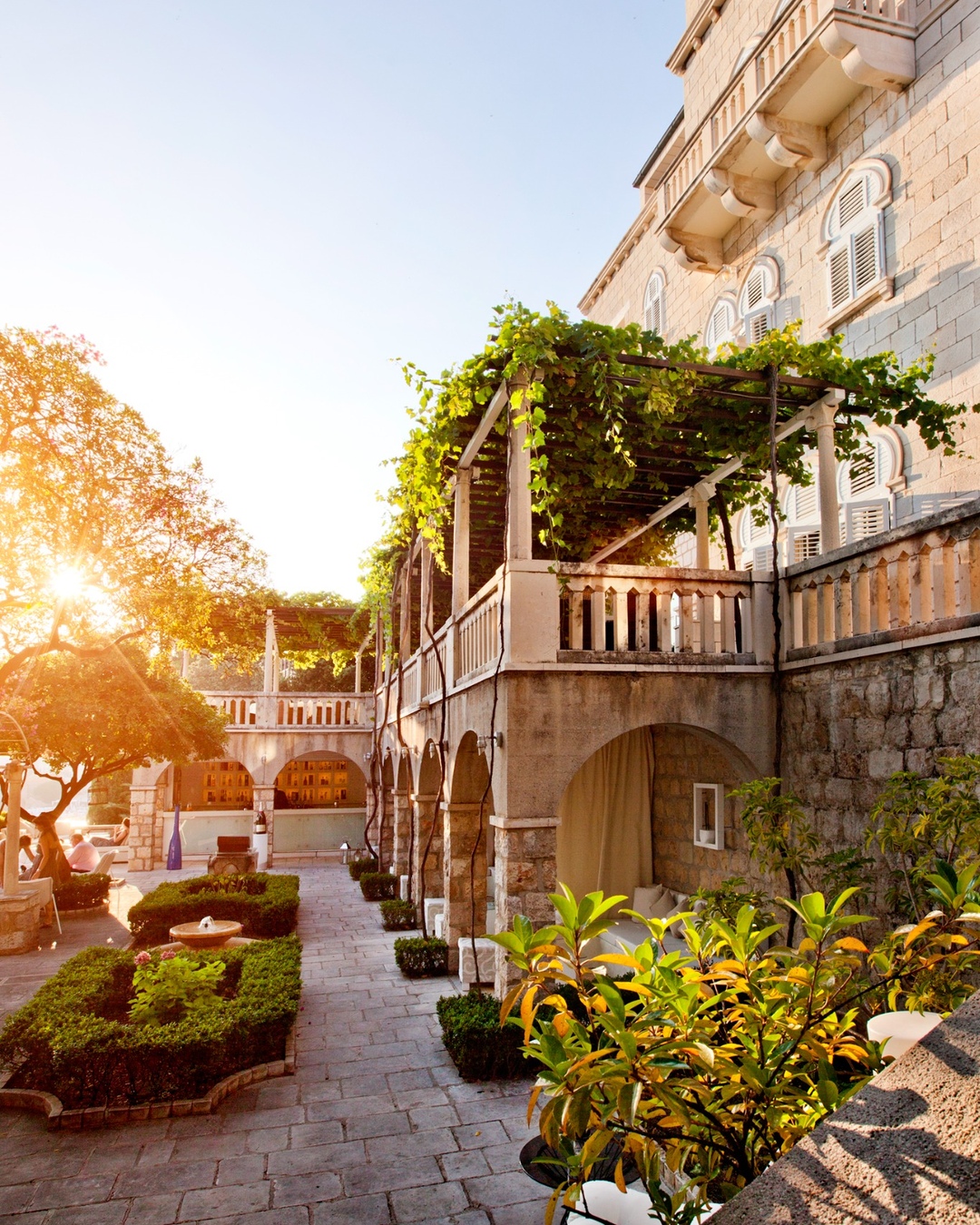
Villa Argentina’s own story reaches back to the early twentieth century, when the original villa was built as a private residence. Over the decades, it became one of Dubrovnik’s familiar hotel addresses, welcoming generations of travellers, including Elizabeth Taylor and Richard Burton.
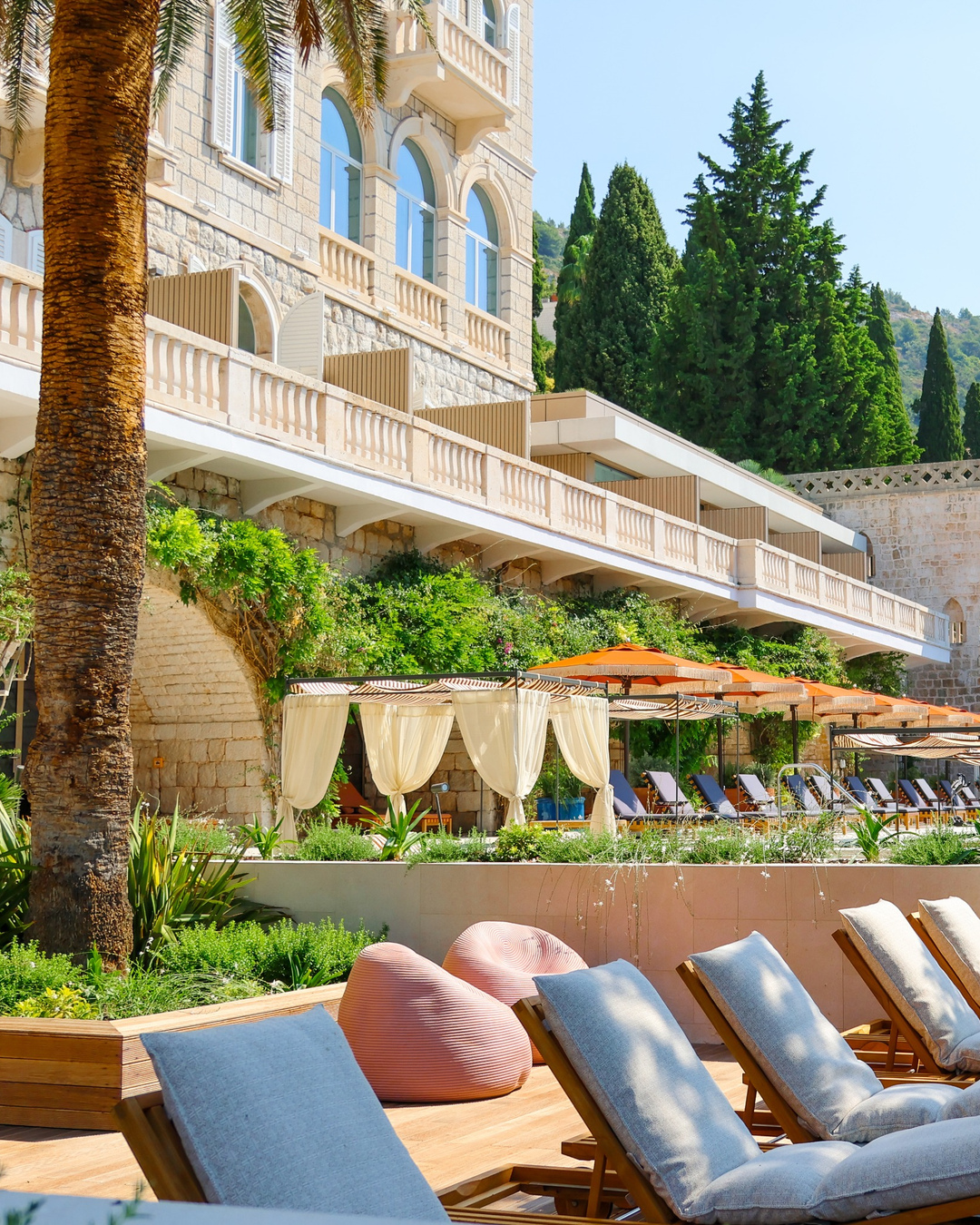
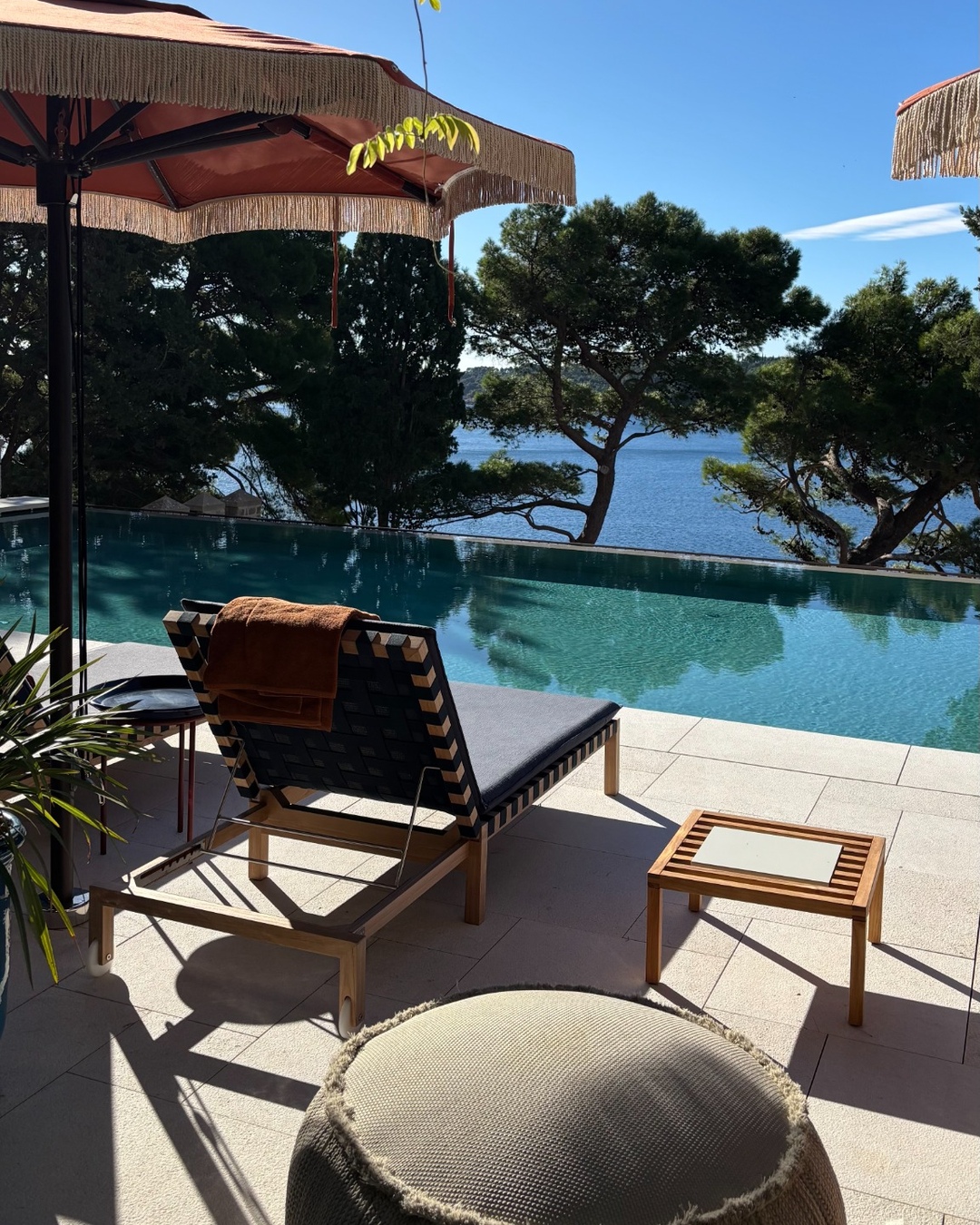
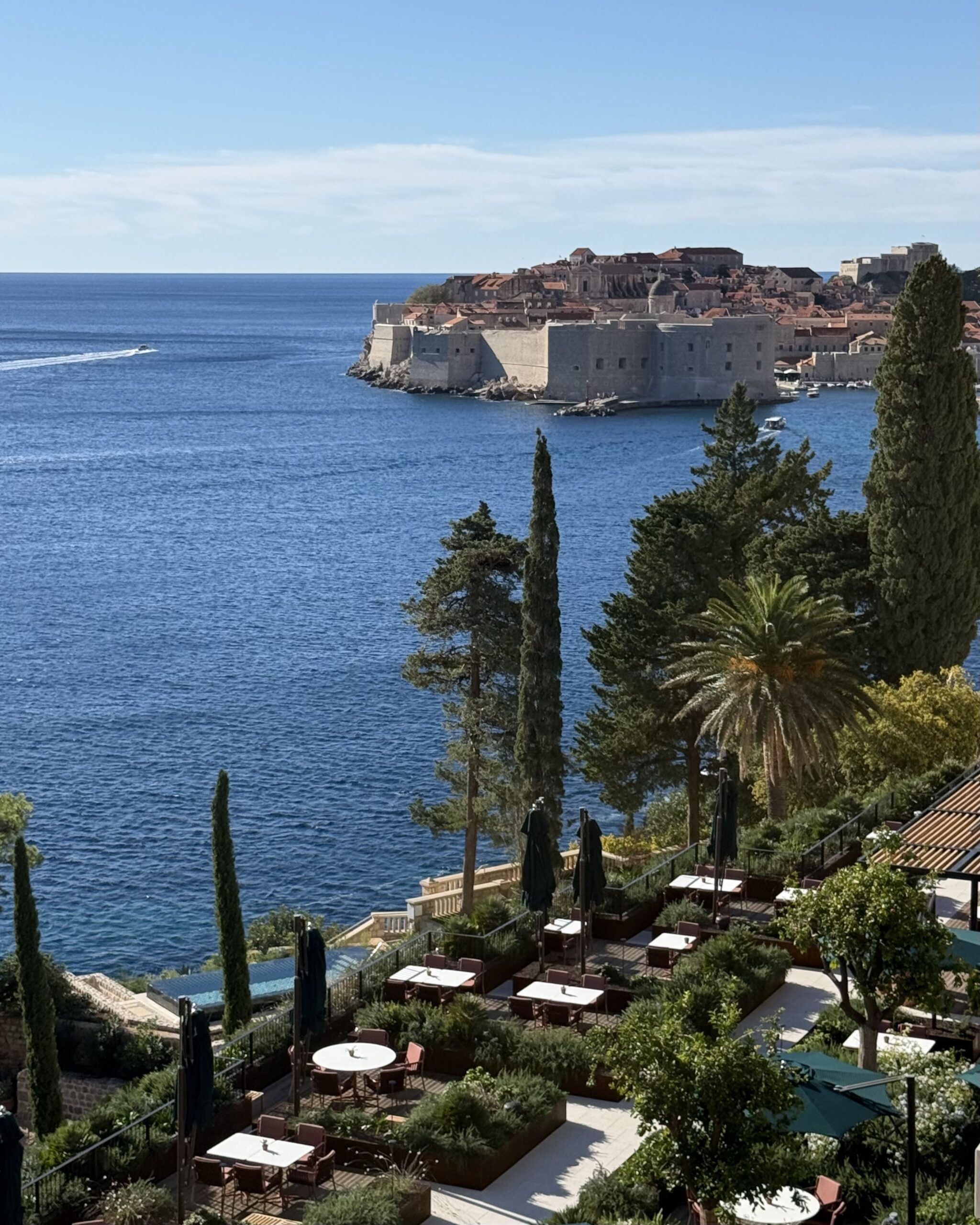
Its setting has always been part of its appeal. Mediterranean gardens, terraces overlooking the Adriatic, tall cypress trees and views towards the rooftops of the Old Town and the greenery of Lokrum. Together with neighbouring Villa Orsula, Villa Argentina has now entered a new beautiful chapter.
Mediterranean fabrics, natural materials and interiors opening towards the beautiful gardens and the sea bring a new atmosphere to the property. A central garden terrace connects the two villas, while renewed dining spaces, outdoor terraces and an indoor-outdoor spa offer different ways to enjoy the surroundings.
But what interested us most was the thought given to something that was already there. In a renovation of this scale, it would have been easy to focus entirely on creating something new. Instead, considerable time, expertise and care were dedicated to ensuring that Dulčić’s work would remain part of Villa Argentina. It is a decision we particularly appreciate.
An afternoon that turned into evening…
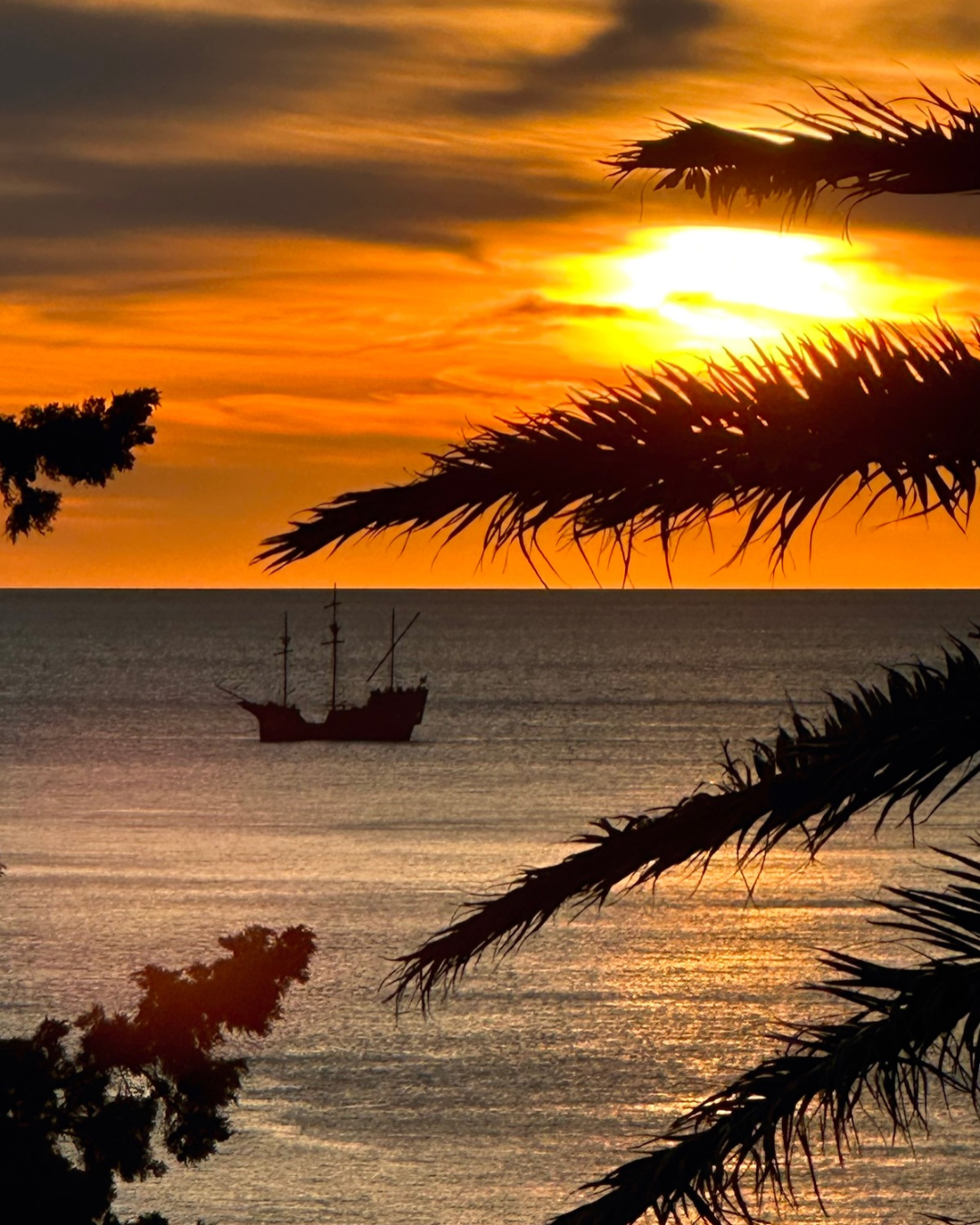
We spent the rest of the afternoon and well into the evening on the terrace with the hotel team, enjoying a wonderful meal, a few glasses of wine and watching the changing light over the Adriatic as the sun slowly set.
In front of us were the sea, the island of Lokrum, the city’s architecture and the golden sun — the very elements that a Dubrovnik artist had brought together in coloured glass almost sixty years earlier.
We had come to discover what was new at Villa Argentina. Instead, one of our favourite discoveries was something that had been there since 1967. And we are rather glad it is still there.